
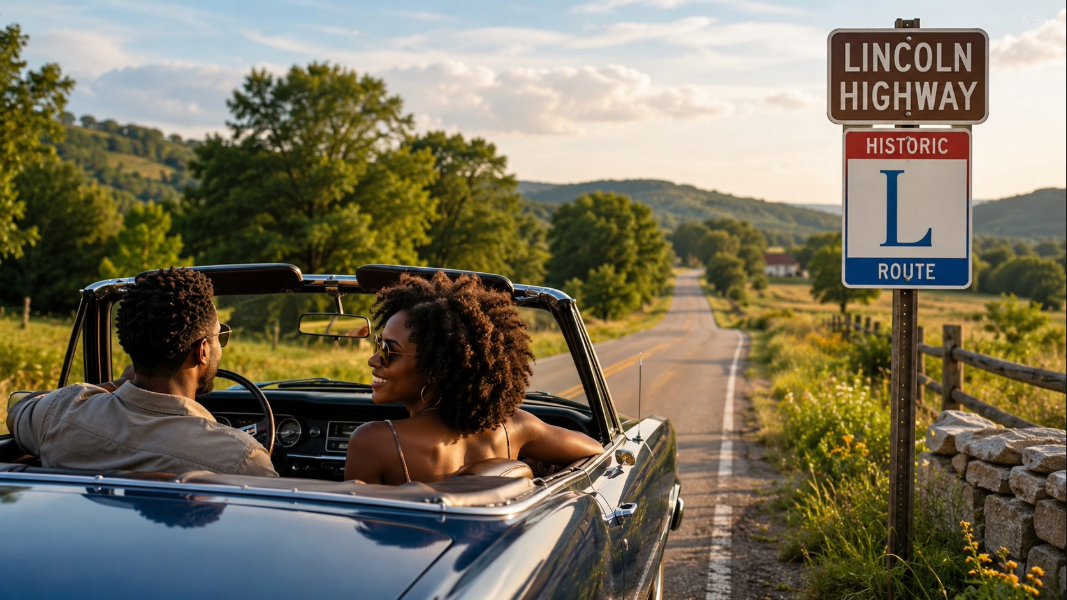
Between rising travel costs, higher gas prices, endless wedding decisions and the pressure of planning the “perfect” day, many engaged couples are craving a simpler kind of escape this summer. And surprisingly, the answer may not be an expensive flight or luxury resort, but an old-fashioned road trip. After all, the beauty of a road trip is that even a short stretch of open highway can feel like a true getaway.
A road trip—especially one rooted in history, small-town charm and scenic detours—can be one of the most rewarding ways to travel this summer. It’s slower. More personal. And for couples, it offers something increasingly rare: uninterrupted time together.
Whether you’re newly engaged, longtime partners or simply overdue for a weekend escape, there’s something romantic about rolling down the windows, picking the music and seeing where the road leads. And if you’re looking for a route that feels more meaningful than another crowded interstate exit filled with chain restaurants and identical rest stops, the historic Lincoln Highway may be your perfect summer adventure.
America’s Original Road Trip Route

Long before Route 66 became famous, the Lincoln Highway was America’s first transcontinental highway, stretching more than 3,000 miles from New York City’s Times Square to San Francisco’s Lincoln Park.
Dedicated in 1913, the route was designed during the infancy of the automobile era, when cross-country travel was still considered wildly ambitious. Spearheaded by entrepreneur Carl Fisher, the visionary behind the Indianapolis Motor Speedway, the Lincoln Highway became a symbol of freedom, mobility and discovery.
The original highway crossed 13 states and followed portions of historic trails and roads dating back centuries. In New Jersey, parts of the route traced roads first built by Dutch colonists in the 1600s. In Ohio, sections followed ancient Native American trails. Further west, the highway overlapped with parts of the famed Mormon Trail.
Today, while much of the original route has merged into highways like Interstate 80 and U.S. 30, travelers can still follow long stretches of the historic roadway, discovering vintage diners, quirky roadside attractions, mom-and-pop shops and postcard-worthy small towns often missed by modern travelers.
Why the Lincoln Highway Is Perfect for Couples

Unlike rushed airport connections or packed tourist itineraries, a road trip invites couples to slow down and reconnect.
There’s intimacy in the little things: sharing playlists, stopping for pie at a roadside diner, getting lost in a small town or watching a sunset from somewhere unexpected. The Lincoln Highway especially lends itself to spontaneous moments, encouraging travelers to explore places they’d normally drive past.
And the beauty of this route is that you don’t have to tackle all 3,000 miles. Even a long weekend can feel like a meaningful escape.
Pick a section near you, map out a few scenic stops and embrace the freedom to wander.
Stops Worth the Detour
Part of the fun of traveling the Lincoln Highway is discovering America’s hidden gems along the way. Here are just a few memorable stops to inspire your summer itinerary:
- In New York, snap a classic photo together in Times Square before officially beginning your journey.
- In New Jersey, explore innovation and history at the Thomas Edison Center in Menlo Park.
- In Pennsylvania, stop by the whimsical Haines Shoe House in York or visit the National Watch and Clock Museum in Columbia.
- In Ohio, satisfy your sweet tooth along the famous Buckeye Candy Trail.
- In Indiana, visit the Lincoln Boyhood National Memorial and learn about Abraham Lincoln’s early years.
- In Illinois, enjoy the peaceful scenery surrounding the Dutch Windmill in Fulton.
- In Iowa, dive into local history at the Ames History Museum.
- In Nebraska, take a nature break to witness the breathtaking Sandhill cranes in Kearney.
- In Wyoming, stop for photos at the impressive Lincoln Head Monument in Laramie.
- In Utah, experience pioneer history at This Is The Place Heritage Park.
- In Nevada, car enthusiasts can explore the National Automobile Museum in Reno.
- And in California, finish your adventure by driving the stunning Sierra Nevada South Route, often called the Pioneer Route.
Rediscover the Joy of the Journey
Summer travel doesn’t have to mean expensive flights, packed airports or over-planned itineraries. Sometimes the best memories happen between destinations—on scenic backroads, in unexpected small towns and during the conversations you only seem to have when there’s nowhere else to be.
The Lincoln Highway offers something many engaged couples truly need: uninterrupted time together without timelines, venues or RSVP deadlines hanging over every conversation. It’s a chance to slow down, reconnect and rediscover the joy of the journey itself.